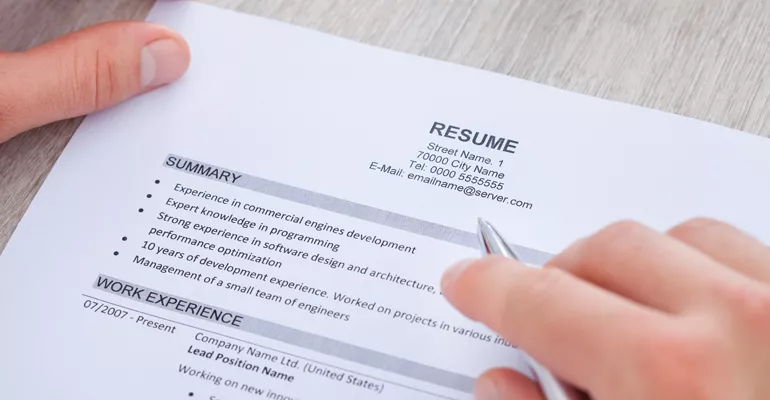
Here’s a fun fact: recruiters typically spend only 30 seconds to 60 seconds scanning a resume – just long enough to skim through it (and to notice any spelling mistakes). So, first impressions count!
A well-written resume that recruiters like will be key to getting you that job you want.
The overall aim of a resume is to market yourself and your skills to an employer, and to convince them to call you in for an interview.
While there are no hard and fast rules about what needs to go into a good resume, you can’t go wrong if you adhere to these 6 crucial steps – no matter what area of work you are applying to!
Step #1: Focus your message
Before you start writing your resume, you need to decide what you actually need it to say.
Many graduates simply start writing with no clear direction, filling in whatever they feel works best as they go along.
A resume without a purpose is like a badly-written story – it just leaves the reader confused about the point of it all.
How you focus your resume will depend on the graduate job and industry you are applying to, as well as what you want the recruiter to pay attention to.
A good idea is to look up ads for similar jobs and see if you can find overlapping requirements, skills, or key phrases in the job descriptions. This will give you an idea of the points that recruiters will be keeping an eye out for.
List down the phrases and terms that keep popping up, and use them to help you work out what information to include and how to express it in your resume.
This will help you showcase skills, qualifications, and experience that specifically match the employer's requirements.
Step #2: Pick a resume format... and stick to it!
As you work on your resume, ask yourself if it is clear, easy to read, and consistently formatted.
Graduate recruiters don’t have time to waste locating hidden details, so your resume needs to be broken down into clearly marked, easily-readable sections. Most resumes typically follow the same format:
- Personal details
- Education and work experience in chronological order; and finally...
- Your other interests.
You can, of course, use other types of resume formats – how you choose to structure yours is up to you. However, the most important thing is to decide on a layout and style and then stick with it throughout.
Make sure your structure, section headers, and choice of font are consistent from start to finish.
It’s important to think about the industry you’re applying to as well. Some sectors, such as law and finance, are more traditional than others and will not be impressed by a gimmicky-looking resume with fancy visuals.
If you're applying for jobs in creative or design-oriented roles, a fresh approach might not be held against you, but some recruiters may be put off if your resume is too hard to decipher (or badly-designed!).
Do your best to keep you resume simple and easy to digest. A good idea is to get someone to skim through yours after you’re done.
If they can find out everything they need to know about you with just one glance, then you’re on the right track.
Check any guidelines the employer has provided as well – if they specify that they only want one-page résumés, that's what you need to do!
Step #3: Use the space you have wisely
The maximum length of a graduate resume is two pages of A4, so space matters! Here are some tips to help you get the most out of what little space you have:
• Be logical – recruiters will read from the beginning, so this is where the most relevant information needs to go to catch their attention.
• Allocate the most space on your resume to information that is most relevant to the job (e.g. Devote more space to an internship within your desired career sector than for one that is not.)
• Review the selection criteria for each employer and match your own skills to those as closely as possible.
• When trying to showcases skills, don’t blindly list every task or activity you have done. Provide brief statements that illustrate how you have used and developed your skills.
• Save space by leaving out anything you don't need. This gives you more space to sell your skills. For example, you don't need to include the words “Curriculum Vitae”, activities dating back to secondary school, or your age, gender, or NRIC number!
Make the most of those two pages! A recruiter may feel that one and a half pages is neither here nor there.
Keep your bullet points short and sweet: mostly only a line long, and ideally not longer than a line and a half.
Step #4: Fill in the gaps
Never, ever leave anything up to the recruiter’s imagination! Information gaps are very obvious on resumes, especially since recruiters will be actively looking for them when they check continuity and consistency.
As tempting as it may be to miss out bad exam results, or to not mention those lost holiday months that are awkward to explain, it’s much worse to leave them out altogether.
If you do, recruiters will end up trying to guess what should be there and why you’ve left it out.
Not all recruiters have the time to call you to double-confirm facts, and whatever scenario they conjure up in their heads about those gaps may end up being worse than the truth.
In short, information gaps can put your resume in doubt and result in a lost interview.
Step #5: Don’t stand out from the crowd for the wrong reasons!
When you’re competing against other graduates for the very best positions, you’ve got to stand out from the crowd or risk being lost in a sea of identical applications.
However, it’s important to make sure your resume gets noticed for the right reasons instead of the wrong ones!
Plenty of graduates fire off resumes without any after-editing, such as a round of proofreading.
Even if your skills and experience prove you are the perfect fit for the job, recruiters will be distracted if they can't find your degree result, or if you resume is full of typos.
Even your choice of e-mail address can be a potential pitfall if it sounds dodgy or unprofessional. Make sure your e-mail address is suitably professional, ideally with your first and last names showcased in the address.
Addresses like “stiletto_edge” or “magic_unikitty” will get your resume sent straight to the discard pile!
Avoid the following pitfalls as well:
- Having a coloured background for your resume (unless you’re going for a creatively-formatted one).
- Using fancy but hard-to-read fonts. WordArt is a huge no-no too.
- Writing about yourself in the third person – it just sounds pretentious.
- Using complicated words to show off your vocabulary. Recruiters don’t have the time to figure out what they mean, and there’s always the risk that you will not use them correctly either!
Step #6: Check your resume carefully after you’re done
Once you have finished your resume, print out a copy and read through it to make sure that it:
- Makes sense
- Is targeted specifically to the job and employer
- Shows you meet the employer's minimum requirements
- Has no spelling, spacing, or formatting errors.
Try to get feedback from other people you trust. All of the details you've included in your resume may make perfect sense to you, but you may be surprised at the things that others will stumble over or query.
Be prepared to receive constructive criticism on your resume and to hear about the positive traits others see in you that they think you should sell.
Ultimately, this will help you to produce a more rounded resume that will be easier for recruiters to read.
Last but not least, your university careers service should also offer resume or CV clinics, as well as some sessions on writing them. Drop by and let them have a look at yours!